
Why this project exists
When Everything Goes Down
What Hurricane Wilma taught Cozumel about depending on systems that can fail together.
Most days, the systems around us work so quietly that we barely notice them. The lights come on. The internet connects. Water reaches the tap. Phones find a signal. Stores open, fuel is available and roads lead where we need to go.
Then a major event hits—and several of those systems can fail at once.
Hurricane Wilma showed Cozumel what that looks like. Its lesson is still relevant far beyond this island: preparedness is not about predicting every disaster. It is about understanding what you depend on and building enough backup layers that one failure does not bring everything else down with it.
Before the storm
The systems we count on every day
Modern life depends on connected systems. Electricity powers communications and water equipment. Internet and cellular networks carry information. Roads and fuel keep supplies moving. Stores depend on all of them.
That works well—until several links in the chain fail together.
Power
Lighting, refrigeration, charging, medical equipment, pumps and the devices that connect us.
Internet & Communications
News, emergency information, family contact, work and the ability to ask for help.
Water
Drinking, cooking, sanitation and the basic routines that protect health.
Essentials
Food, fuel, lighting, first aid, medications, tools and the supplies needed to function.
The danger is not always one system failing. It is what happens when the systems that support one another begin failing together.
Cozumel, October 2005
Wilma was not an ordinary storm
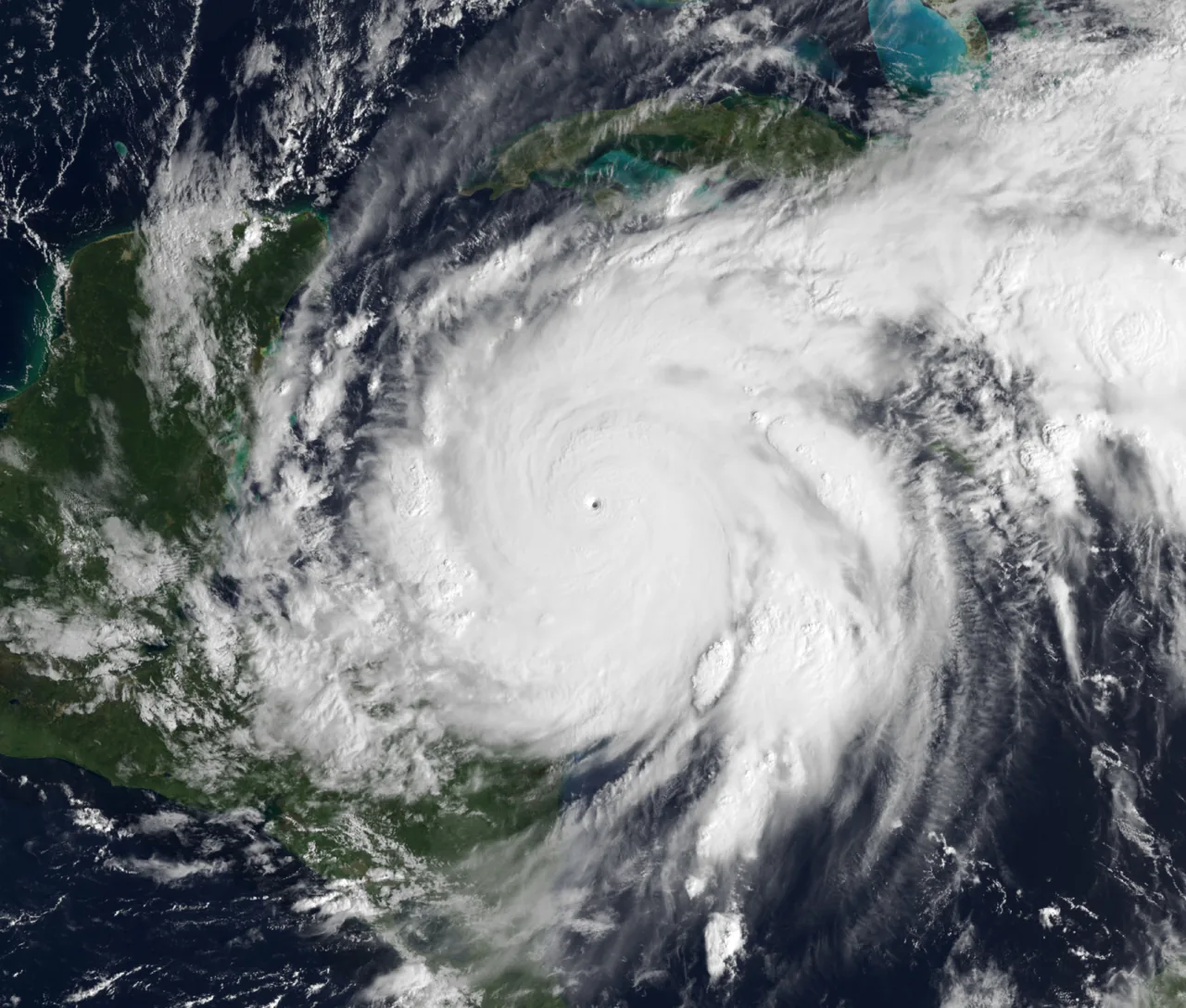
In October 2005, Hurricane Wilma intensified into one of the most powerful Atlantic hurricanes ever recorded. According to the National Hurricane Center, peak sustained winds reached 185 mph and the minimum central pressure fell to 882 millibars—the lowest central pressure recorded in an Atlantic hurricane.
Wilma reached Cozumel on October 21 with Category 4 intensity and sustained winds near 150 mph. The storm moved slowly across Cozumel and the northeastern Yucatán Peninsula, subjecting the area to destructive winds, heavy rain and storm surge for an extended period.
Those facts describe the storm. They do not fully describe what happens to daily life when an island's infrastructure is damaged at the same time.
The cascade
The storm damaged more than buildings
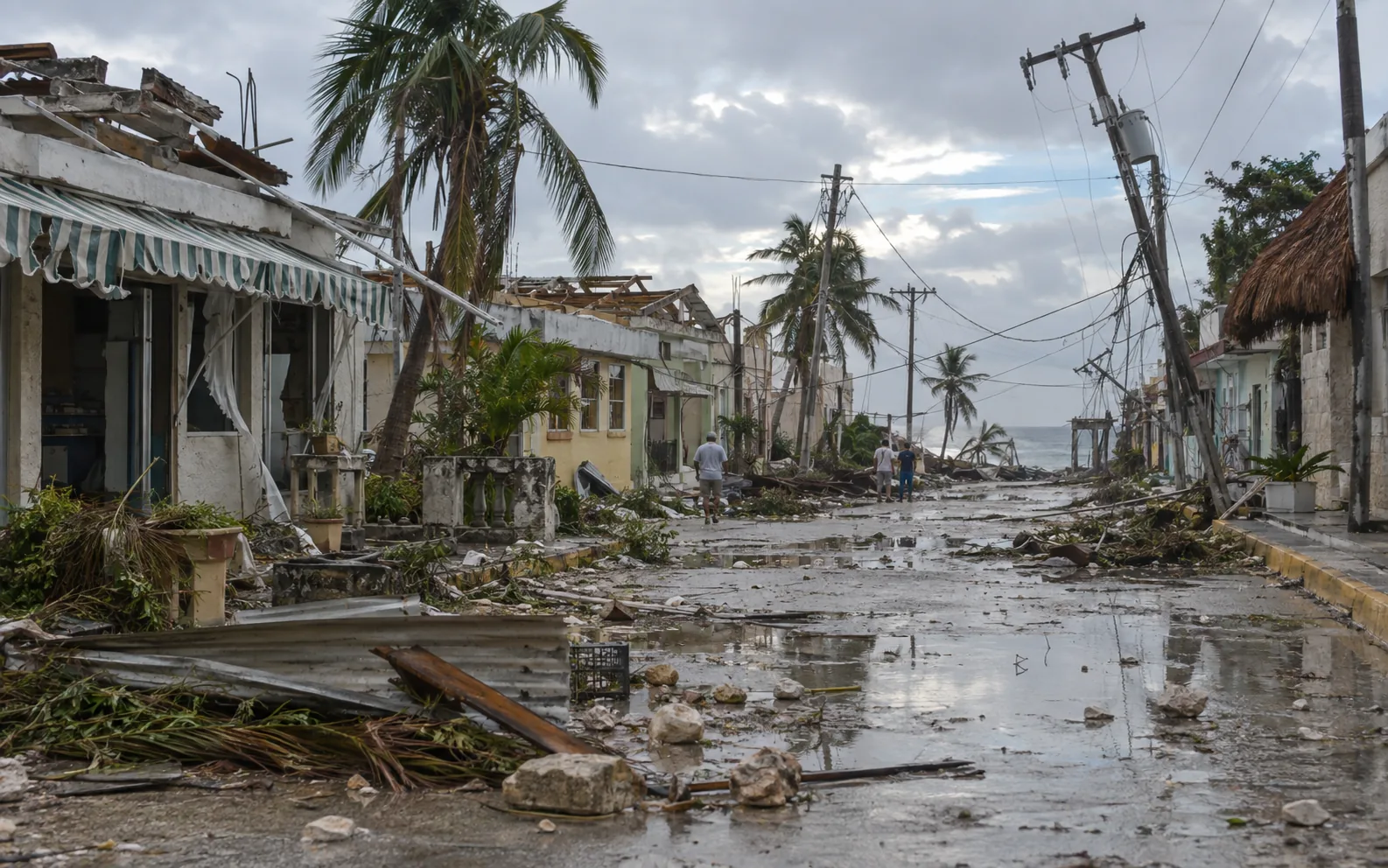
When a hurricane damages power lines, cellular equipment, roads, homes and businesses across the same area, the emergency does not remain confined to one category.
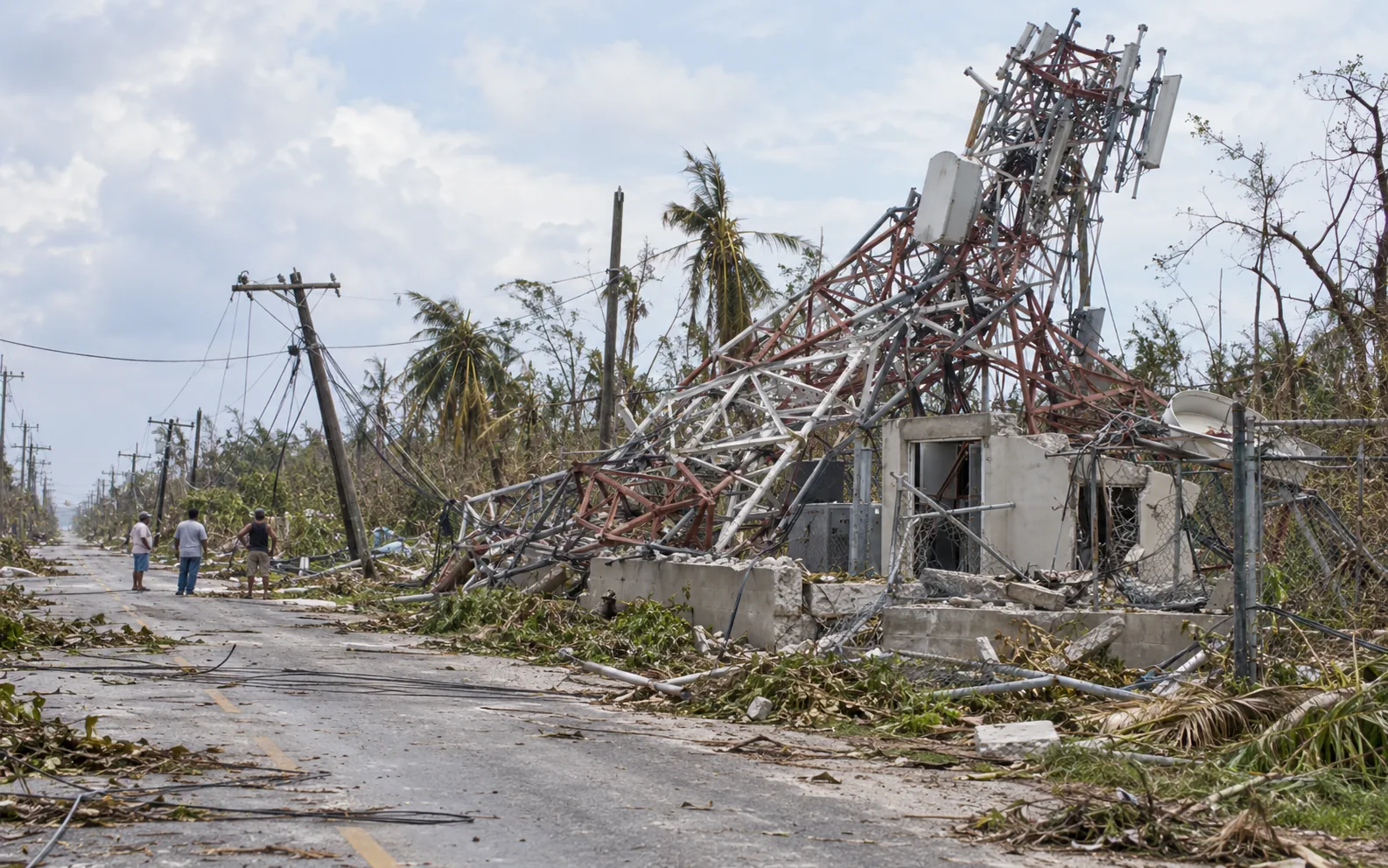
Power loss affects lighting, refrigeration, charging and communications. Damaged cellular equipment makes it harder to reach family, obtain information or coordinate help. Blocked roads slow repairs and resupply. Fuel becomes more difficult to obtain. Water and sanitation can become urgent concerns. Businesses may remain closed even after the sky clears because their employees, suppliers and utilities are facing the same disruption.
This is the part that can be easy to miss while everyday systems are working: our conveniences are connected, and so are their failures.
Power
Without electricity, lighting, refrigeration and device charging stop at the same time.
Communications
Damaged cellular equipment makes it harder to reach family, get information or coordinate help.
Water & sanitation
Pumping, treatment and distribution depend on power, so clean water and sanitation can become urgent.
Roads & fuel
Blocked roads slow repairs and resupply, and fuel becomes harder to obtain.
Food & supplies
Stores may stay closed because their staff, suppliers and utilities face the same disruption.
Recovery services
Repair crews, inspections and deliveries all queue behind the same damaged infrastructure.
The longer emergency
The wind can stop long before normal life returns
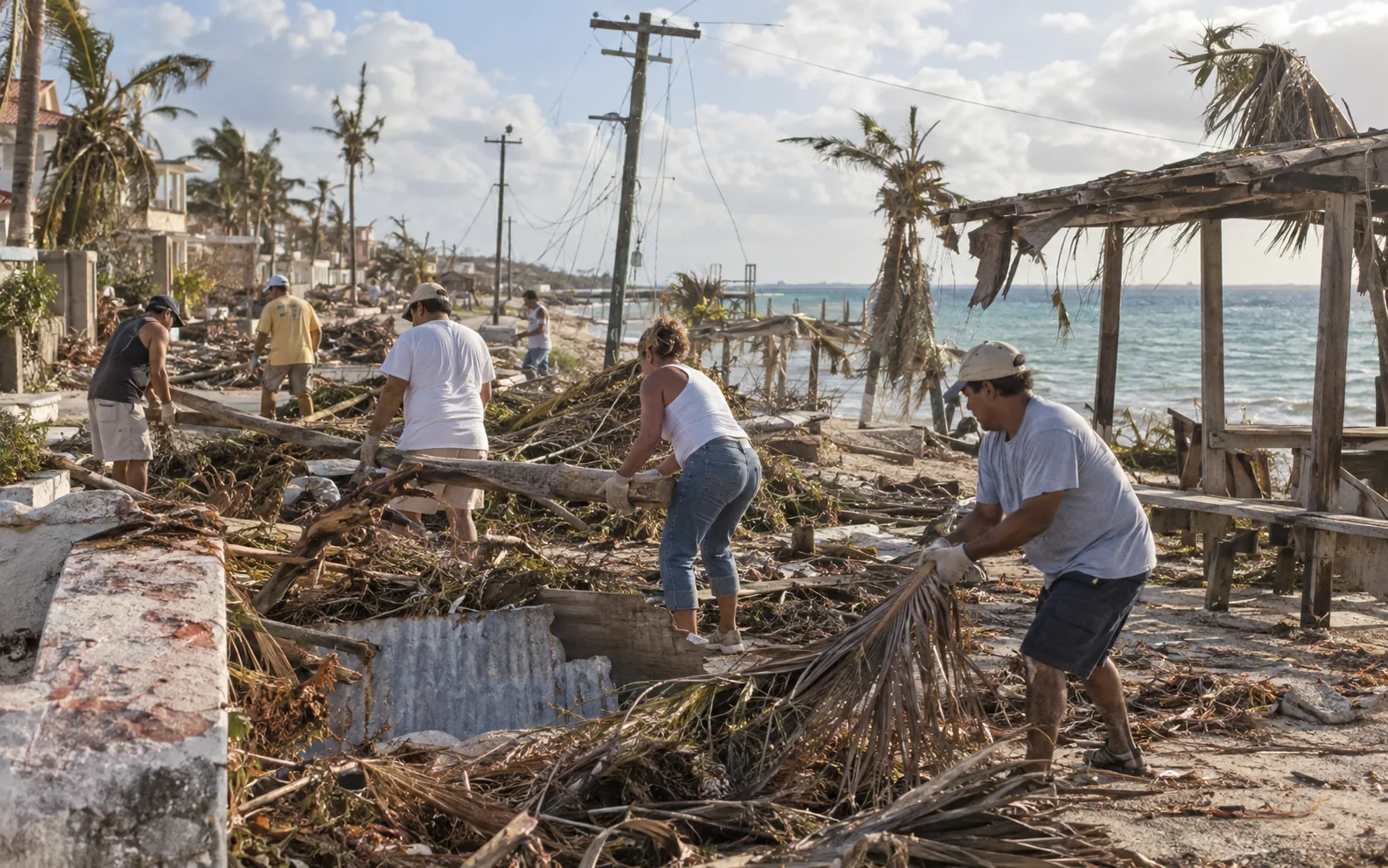
A storm's passage has an ending. Recovery does not happen on the same timetable.
Debris must be cleared before some roads can reopen. Utility crews need access before damaged power and communications equipment can be repaired. Supplies must reach the community. Homes and businesses must be inspected, cleaned and rebuilt.
That means the period after the storm can demand just as much planning as the storm itself. The critical question is not only, “Can I get through the night?” It is also, “What will I need if the systems around me remain limited for days or longer?”
One storm, multiple communities
The same hurricane created different emergencies elsewhere
After crossing the Yucatán Peninsula and the Gulf of Mexico, Wilma struck Florida. The conditions and damage were different, but the underlying lesson was the same: severe weather can disrupt transportation, homes, power and access to essential services far beyond the place where a storm first comes ashore.
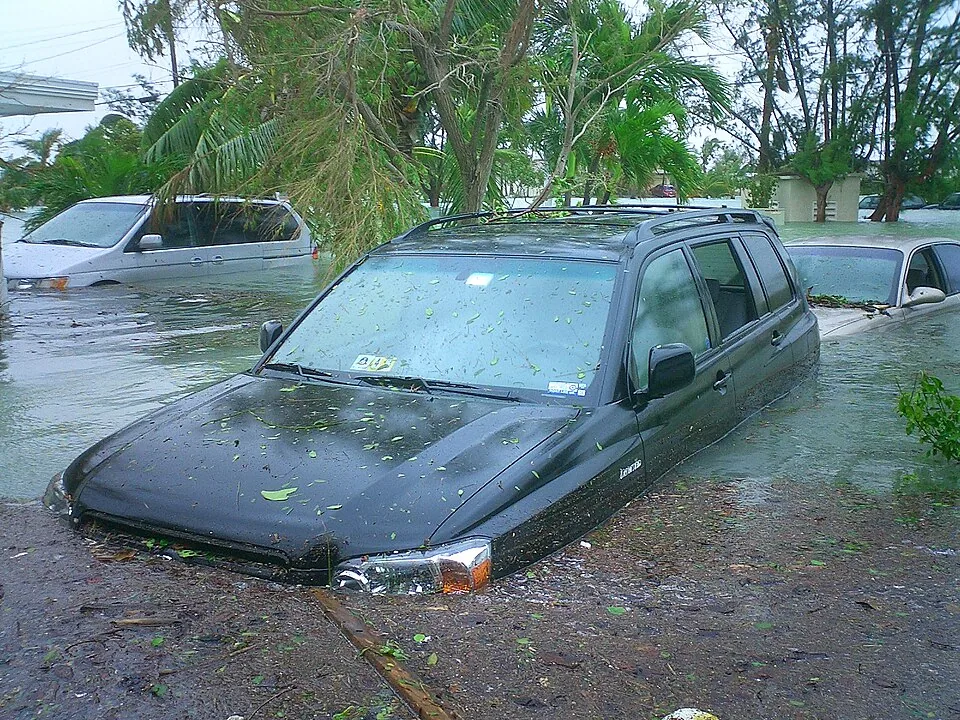
This photograph shows flooding caused by Hurricane Wilma in Key Haven, Florida, on October 24, 2005. It is included to show the storm's broader reach—not as a photograph of Cozumel.
Different hazards, similar failures
Your emergency may have a different name
Cozumel faces hurricanes. Other communities face wildfires, earthquakes, winter storms, tornadoes, flooding, extreme heat, volcanic activity or regional power outages.
The event changes. Many of the consequences do not.
People still need safe water. They need light and a way to charge critical devices. They need reliable information and a way to contact others. They need food, medications, basic tools and enough flexibility to function while normal services are interrupted.
Preparedness should reflect local risks, individual health needs, household size, budget and living situation. There is no universal shopping list and no single product that solves everything.
My first close look
This concern did not begin in Cozumel
In 1992, after graduating from Arizona State University, I moved to Plant City, Florida, between Tampa and Lakeland. I bought a lawn and landscape company and lived there for the next eight years.
Every summer and fall brought hurricane season. Most storms missed us, but the preparations, forecasts and near misses were a regular reminder of how quickly conditions could change. Hurricanes do not create only wind damage. Storm surge, flooding and tornadoes can compound the emergency, while power, roads and communications may all be affected at the same time.
On August 24, 1992, Hurricane Andrew struck South Florida.
I was returning from a vacation and flying into Tampa International Airport. As we approached the airport, I looked out the window and saw the enormous storm system affecting Florida. Andrew went on to cause catastrophic destruction across parts of South Florida.
My church later called on us to travel south and help communities dealing with the aftermath. Seeing that destruction firsthand left an indelible mark on me. It showed me that a hurricane is not merely something represented by a forecast cone or satellite image. When it reaches a community, it changes real homes, real neighborhoods and real lives.
That experience stayed with me.
Now I live in Cozumel—an extraordinary place, but also an island exposed to hurricanes and tropical storms. I have not personally experienced a hurricane in Cozumel, and I do not want the page to imply that I have. What I do bring with me is the memory of South Florida after Andrew and an understanding that these events can overwhelm several systems at once.
That is why I take preparedness seriously.
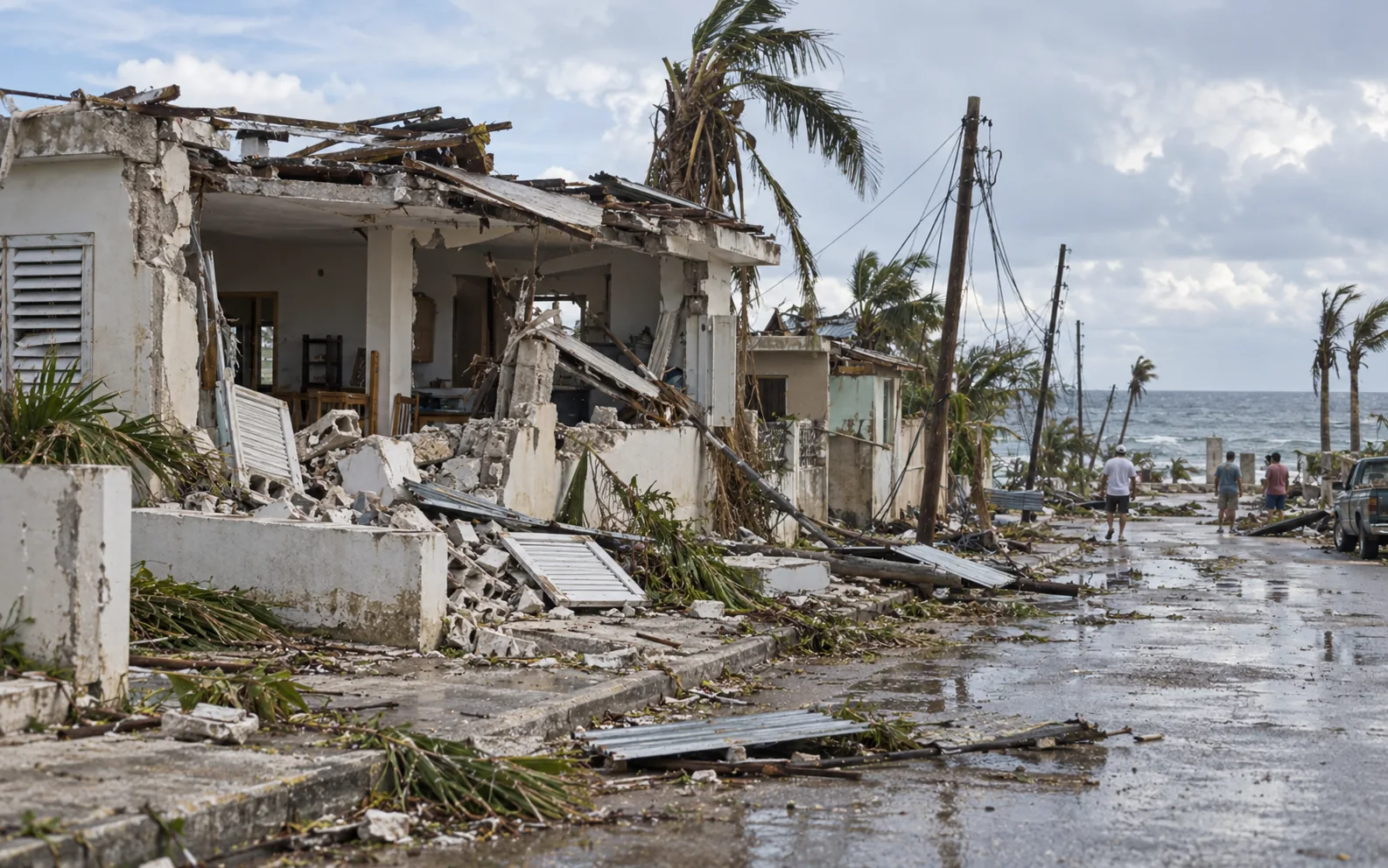
I have not lived through a hurricane in Cozumel. But I have seen what one can leave behind.
My why
I do not want one failure to become every failure
I live in Cozumel now, where hurricane risk is part of the reality of island life. I cannot prevent a storm, guarantee that the power will stay on or control how quickly damaged infrastructure will be restored.
What I can do is reduce unnecessary dependence on any single system.
That is why I am building my preparedness in layers: backup power, more than one path to communication, stored water, essential supplies and practical plans for the interruptions most likely to affect daily life here.
I am documenting the process honestly. I will show what I already own and use, what I plan to test, what works, what does not and what I learn along the way. This is not a claim that my setup is perfect, complete or right for everyone.
It is simply a decision to become better prepared than I was yesterday.
Preparedness is not fear. It is giving yourself more options when normal options disappear.
Start where you are
You do not have to build everything at once
A realistic preparedness system grows over time.
Start by identifying the systems your household depends upon most. Consider what happens if one of them is unavailable for several hours, then several days. Address the most important gap you can afford to address now. Test what you buy. Learn how it works before an emergency. Then add the next layer.
The goal is not to collect equipment. The goal is to preserve useful options.
01
Identify
List the systems and supplies your household cannot function safely without.
02
Prioritize
Address the failure that would create the most immediate problem.
03
Test
Use the equipment and practice the plan before you depend on either.
04
Add a layer
Strengthen the next weak point as time and budget allow.
Start building before you need it
You do not need a perfect system today. You need a clear first step and a plan to keep improving.
Explore the equipment I actually own and use →Sources & image notes
- National Hurricane Center — Tropical Cyclone Report: Hurricane Wilma
- NOAA Hurricane Wilma satellite composite
- Hurricane Wilma flooding in Key Haven, Florida — Marc Averette, CC BY 3.0
- National Weather Service — Hurricane Andrew, August 1992
The NOAA satellite image and Key Haven flooding photograph are archival images and are identified in their captions. The four Cozumel devastation scenes are AI-generated historical reconstructions based on documented hurricane damage. They are included to help illustrate the types of infrastructure failure and recovery conditions described in this article; they are not archival photographs.